Bikepacking Frame Bag — Carry Your Gear Low & Centered
Multi-day riding lives or dies by where your weight sits. Put it high on your shoulders and every climb burns your back; strap it all to a rear rack and the bike wags on descents. A frame bag solves both by dropping the heavy stuff into the empty triangle you're already carrying around. This is where the Ridgeline Trail earns its place.
🚨 Only a few left in stock
Free shipping · 30-day money-back guarantee · Secure checkout
Why low and centered beats a backpack or rear rack
Physics does most of the work here. When your heaviest items — tubes, tools, a full water bladder, spare food — ride inside the frame, they sit between your two wheels and near the ground. The bike tracks straighter, corners more predictably, and doesn't get shoved around by crosswinds the way a tall rear load does. On long bikepacking days that stability is not a luxury; it's the difference between arriving fresh and arriving rattled.
A backpack, by contrast, dumps every ounce onto your shoulders and lower back. An hour in you feel it; six hours in it's the reason you stop. A frame bag frees your back entirely, so you can ride upright, breathe easier, and keep your jersey pockets for the things you actually want on your body. It's the single biggest comfort upgrade most riders make when they move from commuting to multi-day trips. See our full breakdown on the Ridgeline Trail frame bag for the complete spec.
The bikepacking load-out: what the frame bag carries
The rule experienced bikepackers follow is simple: dense and heavy goes in the frame; bulky and light goes at the ends. A sleeping bag is huge but weighs almost nothing, so it rides fine strapped to the bars. A full multitool, a tube and a pump are small but heavy — exactly what you want down in the triangle. Get this split right and a fully loaded bike still feels like a bike, not a wheelbarrow.
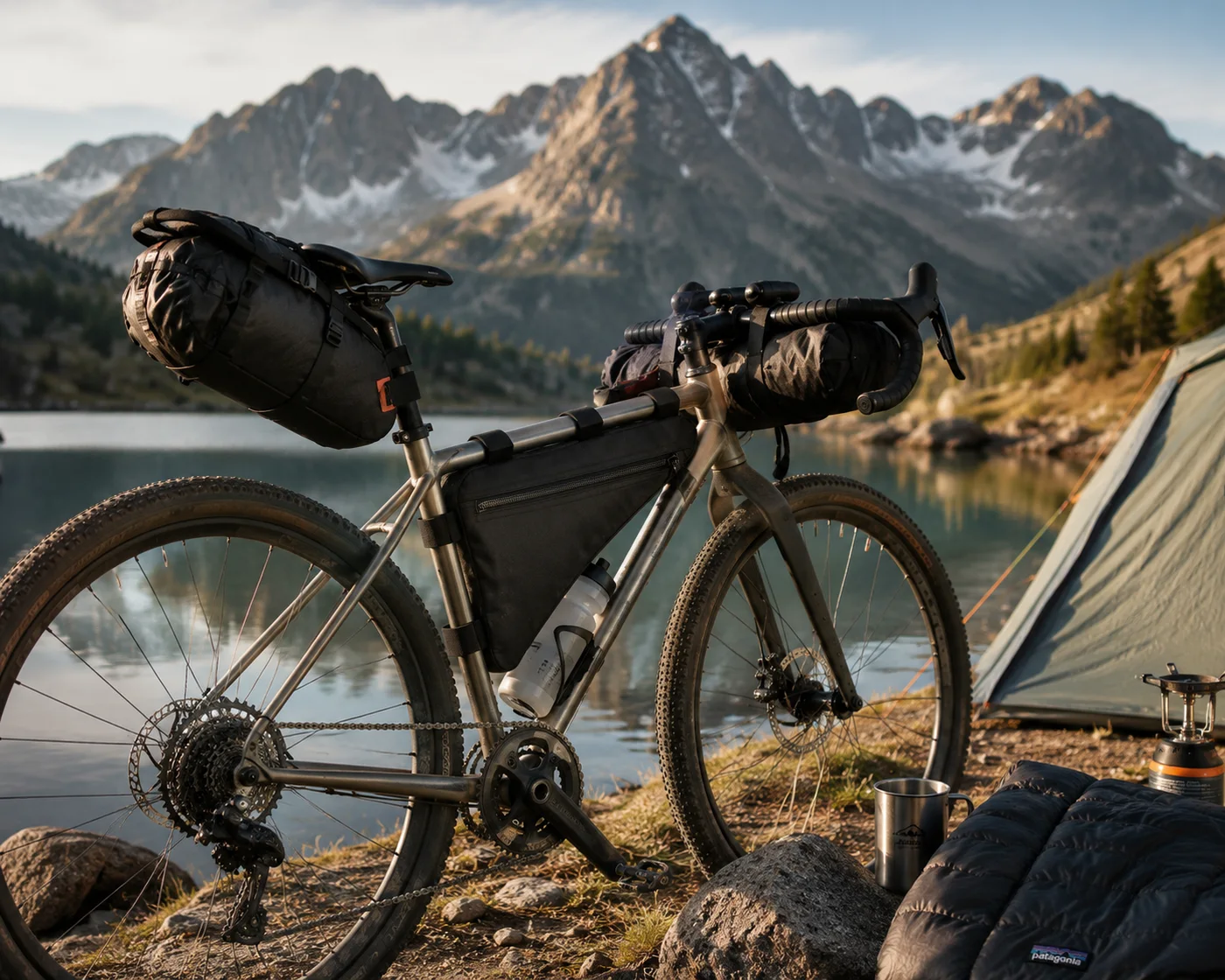
Ridgeline Trail capacity — real-world load-out
Here's how we packed the Trail across three test rides on gravel, using only items buyers have confirmed fit. Instead, this is the daily-access kit the bag swallowed without straining a zipper:
| Item | Where it rides | Why here |
|---|---|---|
| Spare tube + tire levers | Frame bag | Heavy, dense, needed fast on a flat |
| Multitool | Frame bag | Compact and heavy — ideal low weight |
| Mini pump | Frame bag | Long, rigid, tucks along the top tube |
| Snacks / bars | Frame bag | Grab-and-go without stopping |
| Phone + keys | Frame bag | Secure, out of jersey pockets |
| Gloves | Frame bag | Fits when off the bars |
| Sleeping bag / clothing | Seat & bar bags | Bulky but light — keep it off the frame |
Our own load test, gravel rides, 2026. Capacity is qualitative on purpose — we won't quote a liter figure we can't verify.
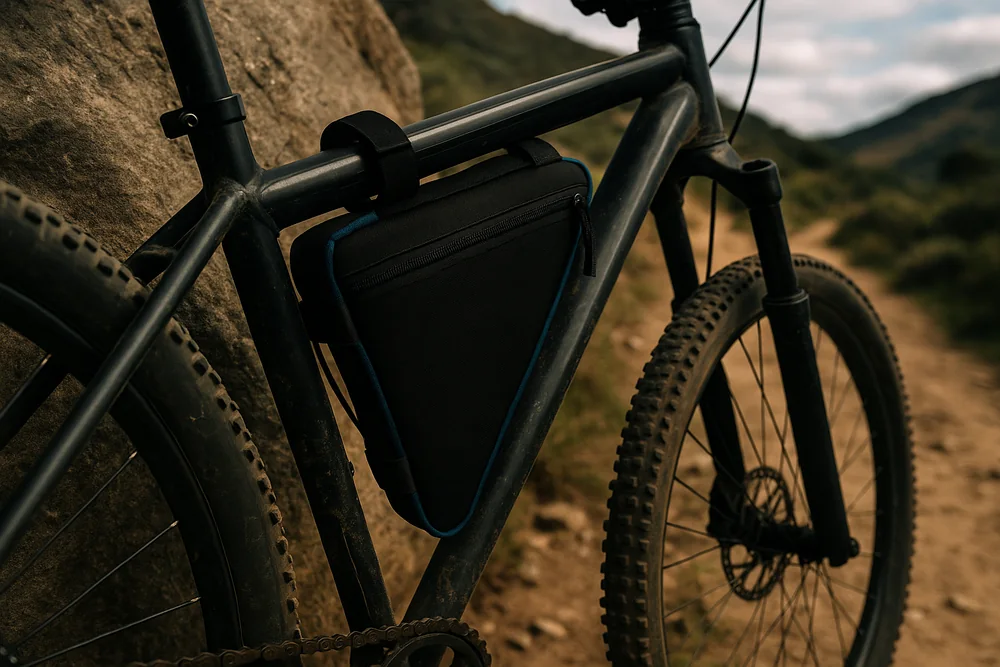
What surprised us was how little the loaded bag interfered with pedaling. With two straps on the top tube and one on the down tube, it sat tight against the frame — no knee rub, no sway out of the saddle. One verified buyer put it plainly: "Excellent quality! Sits snug in the frame and doesn't rattle on rough ground." That rattle-free fit matters more on bikepacking terrain than on smooth pavement.
Bikepacking in the US, by the numbers
Adventure riding isn't a niche anymore — it's part of a cycling base that keeps growing, which is exactly why more riders are hunting for gear that carries weight sensibly.
Americans ride a bike each year — a huge and growing pool of potential bikepackers
— Outdoor Industry Association, 2023
US bike sales hit record highs during the 2020 cycling boom
— NPD Group, 2021
E-bikes are among the fastest-growing US cycling categories, outselling electric cars in unit sales
— LEVA, 2023
More riders — and more heavily loaded e-bikes — means more demand for bags that keep weight low and handling stable. A frame bag is the entry point to that whole system.
Frame bag vs. backpack vs. rear rack
| Carry method | Weight position | Handling | On your body? |
|---|---|---|---|
| Frame bag (Ridgeline Trail) | Low & centered in the triangle | Stable, predictable | No — frees your back |
| Backpack | High, on your shoulders | Raises center of gravity | Yes — tires you out |
| Rear rack + panniers | Behind the rear axle | Tail-heavy on descents | No, but needs eyelets |
None of these is wrong — serious tourers run all three. But if you're building a bikepacking setup from scratch, the frame bag is the piece that does the most for the least money and the least hassle. It bolts on with velcro, needs no rack mounts, and immediately improves how the loaded bike feels. Start there, then add a bundle or seat and bar bags as your trips get longer.
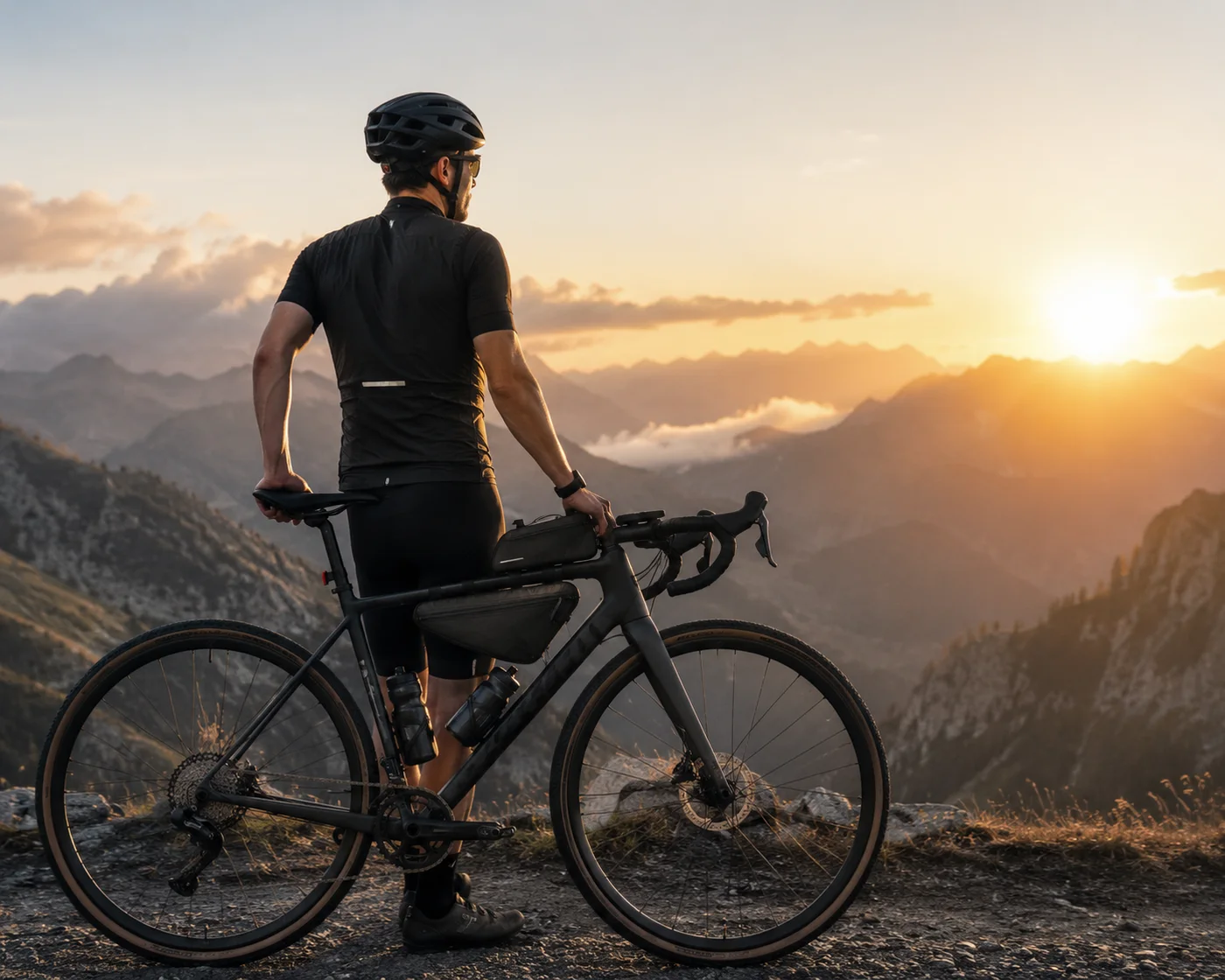
"On a loaded bike, where the weight sits matters more than how much you carry. I pressure-test every bag on real gravel before it goes live, and the Trail's low, centered fit is the single biggest reason a fully packed bike still handles like an empty one. Get the heavy, dense items into the triangle first — everything else is secondary."— Marcus Reed, Gear Editor at Ridgeline
Phone navigation for the trail — the Kit
A frame bag keeps your phone safe, but buried — not ideal when you're following a GPX track through unfamiliar country. That's where the Ridgeline Pilot comes in. Its hard shell is genuinely waterproof, and the touchscreen window works so well one buyer reported "the touchscreen window even reads my fingerprint to unlock the phone." You navigate through the plastic, the phone stays dry, and it sits right in your eyeline on the top tube.
Running both bags is the smart bikepacking setup: the Trail carries your tools and food low in the triangle, the Pilot keeps your map up top and dry. Buy them together as the Ridgeline Complete Kit at $44.95 — a $29.95 discount versus buying separately — and you've got the whole daily-access system sorted in one order.
Trail + Pilot together · Was $74.90 · Free shipping
Packing tips for your first loaded ride
A few habits make a big difference the first time you ride a fully packed bike. Put the heaviest single item at the bottom-center of the frame bag, not near a zipper end — that keeps the load balanced. Wrap anything metal or sharp so it doesn't chafe the fabric or your down tube on chatter. And do a quick shakedown: lift the front wheel, drop it, and listen for rattles before you're ten miles from anywhere.
Strap tension is the other thing riders get wrong. The two top-tube straps and one down-tube strap should be snug enough that you can't wobble the bag with your hand, but not so tight they crush a soft item inside. Buyers consistently note the Trail "fits perfectly on the bike" and holds "plenty of room for a tube, multitool and snacks" — that's the fit you're aiming for. For a full checklist of what to bring, see our guide on what to pack in a frame bag.
One fit note: full-suspension mountain bikes and very small frames leave less room in the triangle, so measure your open space before you order. The Trail adapts to most road, gravel and hardtail MTB frames, and on a tight triangle it simply rides higher in the corner. Riders with the smallest frames often run the Trail alongside our Pilot top tube bag and split the load between the two.
Buying with Ridgeline
Every Ridgeline order ships free worldwide and is backed by a 30-day money-back guarantee, so you can load the Trail, ride it, and send it back if it doesn't earn its place on your bike. Orders arrive in 6–10 business days, and checkout runs on secure Stripe. No subscriptions, no gimmicks — just a well-made frame bag at a fair price. Compare the full range on the Ridgeline Trail page or read real buyer feedback on our reviews page before you decide.
Free worldwide shipping · 30-day money-back guarantee

Marcus Reed · Gear Editor at Ridgeline
Marcus has ridden and tested cycling gear for over a decade across road, gravel and bikepacking. At Ridgeline he pressure-tests every bag on real rides before it goes live — checking fit, weight, weather resistance and how it behaves on rough ground.
Reviewed and updated July 2026. See how we test.
Bikepacking frame bag — frequently asked questions
What is a bikepacking frame bag and why use one?
A bikepacking frame bag mounts inside your frame triangle and holds gear low and centered. That keeps weight off your back and near the bottom bracket, so the bike stays balanced and predictable over long, loaded miles. The Ridgeline Trail fits road, gravel and MTB frames with three velcro straps.
How much can a frame bag carry on a multi-day trip?
The Ridgeline Trail comfortably swallows a spare tube, multitool, mini pump, snacks, phone, gloves and keys — the daily-access kit you reach for on the trail. For clothing and a sleeping setup you pair it with seat and handlebar bags, keeping the frame bag for dense, heavy items you want centered.
Will a frame bag fit my gravel or mountain bike?
Yes. The Trail is a triangle bag secured by velcro straps — two on the top tube, one on the down tube — so it adapts to road, gravel and MTB frames of most sizes. Buyers confirm it "sits snug in the frame and doesn't rattle on rough ground." Smaller full-suspension frames leave less triangle room, so measure first.
Is the Ridgeline Trail waterproof for bikepacking weather?
The Trail uses a tough, water-resistant Oxford/nylon fabric that sheds spray and light rain, which covers most riding days. For phone navigation in sustained downpours, add the Ridgeline Pilot — a hard-shell waterproof top tube bag with a touchscreen window. The Complete Kit pairs both at $44.95.