Half Frame Bag: Carry Your Gear and Keep Your Bottle Cages
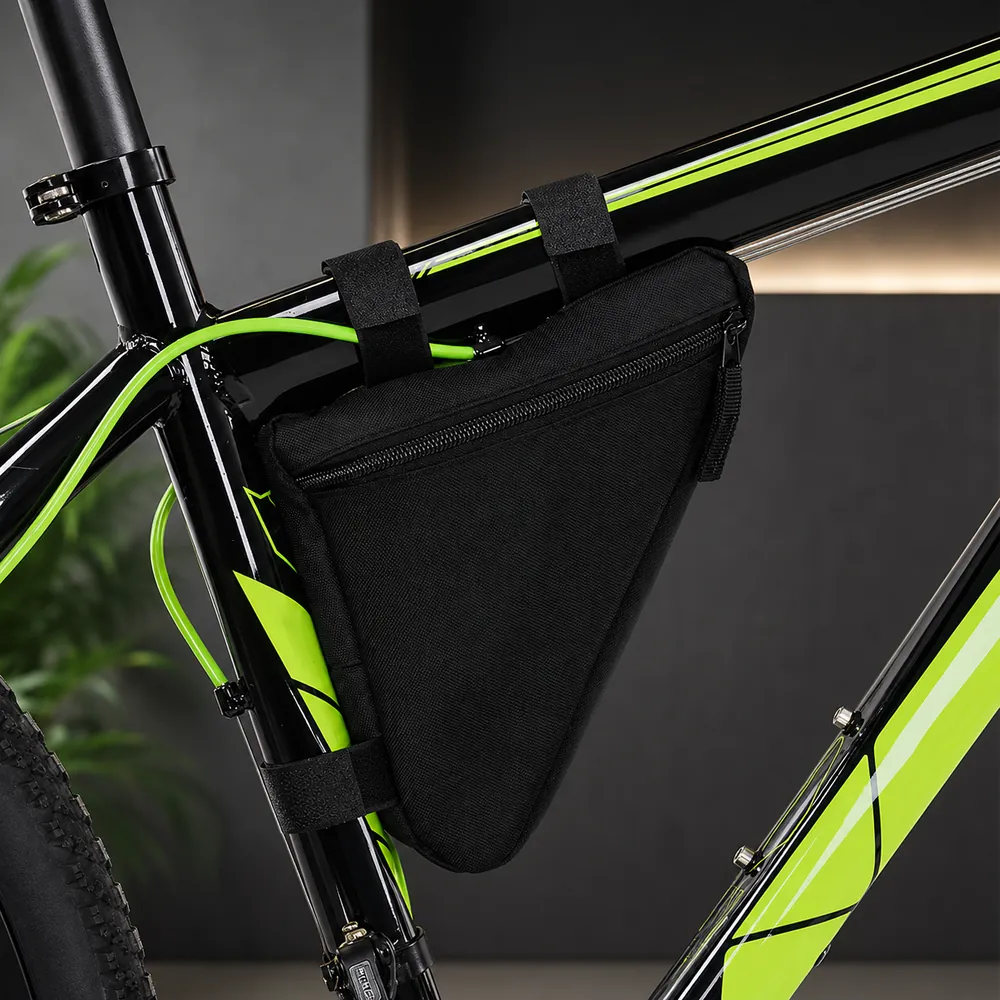
If you love the stability of frame storage but hate losing your water bottles, a half frame bag is the compromise you actually want. Here is exactly how it works, who it suits, where it does not, and how the Ridgeline Trail measures up.

Marcus Reed · Gear Editor at Ridgeline
Marcus has ridden and tested cycling gear for over a decade across road, gravel and bikepacking. At Ridgeline he pressure-tests every bag on real rides before it goes live — checking fit, weight, weather resistance and how it behaves on rough ground.
Pick your bag
🚨 Only a few left in stock
Free shipping · 30-day money-back guarantee · Secure checkout
What a half frame bag actually is
Think of the space inside your bike frame — the triangle formed by the top tube, down tube and seat tube — as prime real estate. It is the lowest, most central place you can put weight on a bicycle. A full frame bag claims the whole triangle for maximum capacity. A half frame bag takes only the top slice, leaving the bottom for what most riders refuse to give up: their water bottles.
The term is descriptive, not a strict standard. Some brands call any smaller top-tube-hugging triangle bag a "half frame bag." What matters is the practical result — does it leave your cages usable? On most frames, a compact triangle bag like the Ridgeline Trail does exactly that.
The bottle-cage benefit, explained
On a full frame bag you usually have to relocate hydration — to a bladder, a hip pack, or a saddlebag reservoir. That works for long bikepacking days, but for daily riding, commuting and shorter gravel loops it is overkill. A half frame bag skips the compromise: bottles stay where your hands already know to look, and the bag handles everything else.
Where the Trail sits on real frames. Across the bikes we mount it on, the Trail behaves as a half frame bag on medium and large frames — it rides high against the top tube and leaves the down-tube cage clear, with the seat-tube cage usually open too. On small and extra-small frames the triangle is tight, so the bag fills more of it and you may keep only one cage or none. The rule of thumb: the bigger the frame, the more of a "half" bag it becomes.
Why frame storage rides better — the physics
This is the core reason experienced riders reach for frame storage. Weight held high (a backpack) makes the bike feel top-heavy and tiring on longer rides; weight hung far back (a loaded rear rack) can make the front end feel light on climbs and twitchy on descents. Load carried down in the triangle does neither — it stays close to the bottom bracket and the bike's roll axis, so the bike still steers and leans the way you expect.
"The first time you carry a tube, a mini-pump and a multitool in the frame instead of on your back, you feel the difference on the very first climb. The bike just feels planted. A half frame bag gives you that without making you choose between tools and water." — Marcus Reed, Gear Editor at Ridgeline
Who a half frame bag is for
It is a big and growing audience. Cycling in the US is not a niche — it is mainstream and still expanding, which means more riders than ever are looking for smarter ways to carry gear on the bike.
Americans ride a bicycle each year — a huge base of riders who need to carry gear on the bike
— Outdoor Industry Association, 2023
US bike sales hit record highs during the 2020 cycling boom, pulling millions of new riders onto bikes
— NPD Group, 2021
E-bikes are among the fastest-growing US cycling categories, outselling electric cars in unit sales
— LEVA, 2023
If you ride an mountain bike, a road bike or gravel, the essentials rarely change: something to fix a flat, something to fuel the ride, and your phone. A half frame bag holds all of that low and out of the way while your cages keep doing their job.
Half frame bag vs full frame bag
| Half frame bag | Full frame bag | |
|---|---|---|
| Triangle space used | Upper portion, along the top tube | Entire triangle |
| Bottle cages | Usually keeps one or both | Usually blocks the cages |
| Capacity | Essentials (tube, tools, pump, snacks, phone) | Larger loads for long days |
| Best for | Commuting, road, gravel, MTB day rides | Bikepacking and multi-day trips |
| Hydration | Frame-mounted bottles stay usable | Move to bladder or hip pack |
| Ridgeline pick | Ridgeline Trail on mid/large frames | See our full frame bag guide |
Neither is "better" — they solve the same problem at different sizes. If you are torn, our frame bag sizing guide walks you through measuring your triangle so you know exactly how much cage clearance to expect. And if you are packing for multi-day routes, read the dedicated full frame bag and bikepacking frame bag breakdowns before you decide.
The Ridgeline Trail as a half frame bag
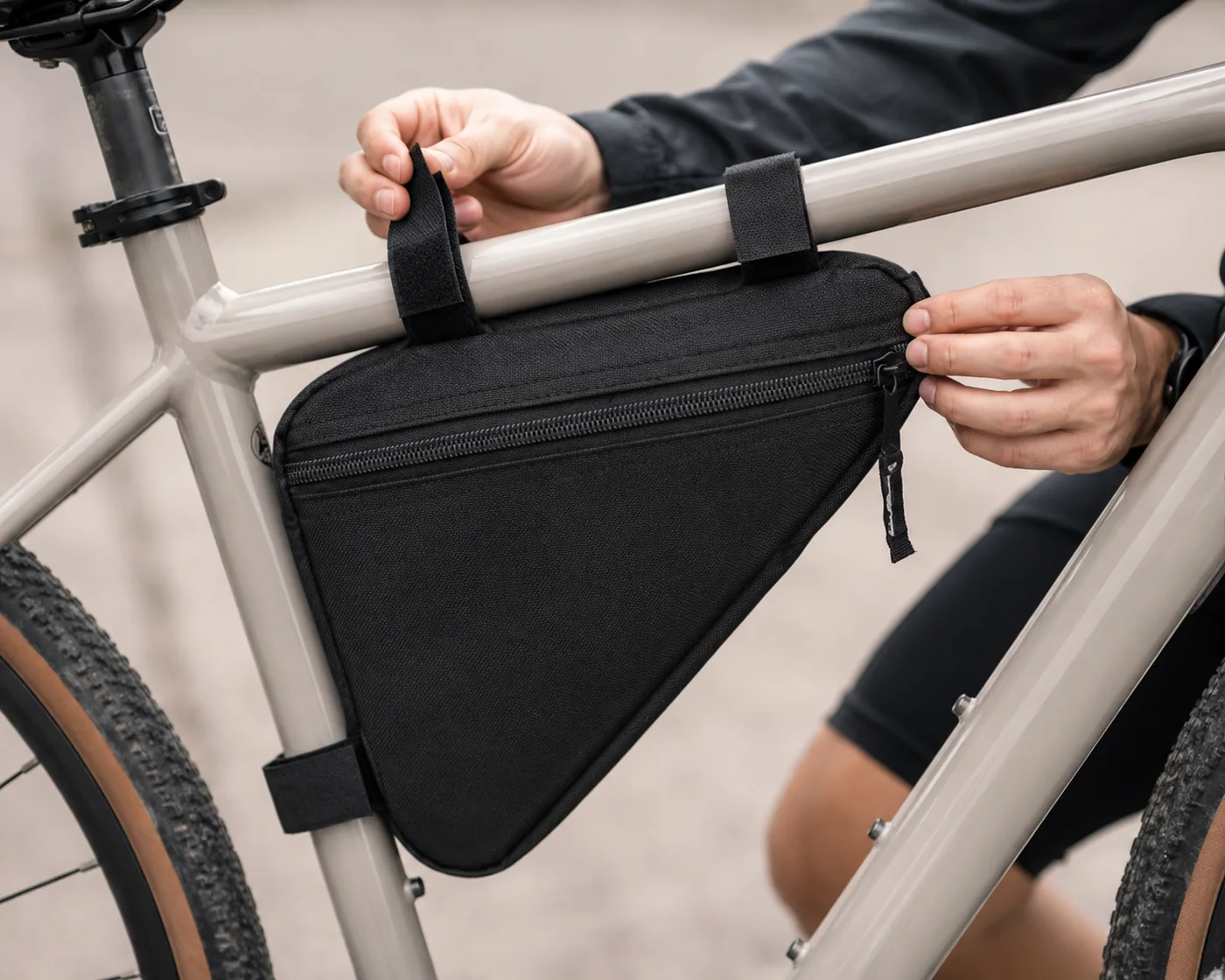
- Mounts inside the triangle with three velcro straps (two top tube, one down tube) — no tools, no permanent hardware.
- Lightweight Oxford/nylon fabric that shrugs off scuffs and trail spray without adding bulk.
- Carries the essentials — spare tube, multitool, mini-pump, snacks, phone and keys, all low and centered.
- Fits road, MTB and gravel frames, in black, black/red or black/blue.
- Sits snug and quiet — verified buyers note it "doesn't rattle on rough ground."
Because the Trail is compact rather than full-triangle, it naturally behaves like a half frame bag on most adult frames — that is exactly why it keeps your cages usable. If you want both the Trail and a waterproof phone mount, the Ridgeline Complete Kit pairs it with the Ridgeline Pilot top tube phone bag at a lower combined price.
Fit note: on small and extra-small frames the Trail fills more of the triangle, so it sits closer to a cage than it does on a large frame. Check clearance against your own bike, and order with the confidence of free shipping and our 30-day money-back guarantee.
Free worldwide shipping · Arrives in 6-10 business days · 30-day money-back guarantee · Secure Stripe checkout
Half frame bag FAQ
What is a half frame bag?
A half frame bag is a triangle bag that fills only part of the space inside your frame triangle — usually the top portion along the top tube — instead of filling the whole triangle. That leaves the lower area open so one or both bottle cages stay usable. It carries low and centered like a full frame bag but keeps your on-bike hydration.
Will a half frame bag leave room for my water bottles?
That is the whole point. A half frame bag hugs the top tube and leaves the down-tube and seat-tube cage mounts clear on most frames, so you keep at least one bottle cage and often both. Exact fit depends on your frame size and triangle shape, so check clearance against your bike before your first long ride.
Does the Ridgeline Trail work as a half frame bag?
Yes, for many bikes. The Ridgeline Trail is a compact triangle bag that straps to the top tube (two straps) and down tube (one strap). On mid-size and larger frames it sits high in the triangle and leaves cage room below, so it can be used as a half frame bag. On very small frames it fills more of the triangle. It costs $29.95 and ships free.
Half frame bag vs full frame bag — which should I get?
Choose a half frame bag if you want to keep your bottle cages and carry the essentials — tube, multitool, pump, snacks, phone. Choose a full frame bag if you carry water in a bladder or hip pack and want maximum capacity for long bikepacking days. The two solve the same core problem — load low and centered — at different sizes.
Still comparing options? Read real owner feedback on our reviews page, browse our latest write-ups on the blog, or explore a waterproof bike frame bag if wet-weather riding is your priority.